Taking Care of Your Breast Implants: A Guide to Long-Term Monitoring
One of the most common questions I get from patients considering breast augmentation is: "How long do implants last?" There used to be a common thought that implants lasted 10 years, but as implant technology has improved, there actually is not a set number of years that implants last.
However, breast implants are not lifelong devices. If you're getting implants, especially at a young age, there's a good chance you'll need more breast surgery at some point, whether for an implant-related reason or a breast-related reason like a lift. The good news is, if everything is going great with your implants and you're happy with how they look and feel, you don't need to have surgery just because a certain number of years have passed.
My motto? "If it's not broke, we don’t have to fix it!" That said, there are some important things you should know about monitoring and maintaining your breast implants over time.
Understanding Different Implant Types
We're now on our fifth and sixth generation of silicone implants, and the technology has come a long way. There are two main types of breast implants:
Saline Implants
These have a silicone shell filled with saline. When a saline implant ruptures, the saline leaks out and is absorbed by your body. You'll know immediately because one breast will deflate! Because of this obvious sign, you don't need any imaging studies to monitor for rupture with saline implants.
Silicone (Gel) Implants
These implants are filled with a thick, cohesive silicone gel. The gel is designed not to leak out when there's a rupture in the shell. This is great for safety, but it also means ruptures can be "silent.” You might not know about a rupture unless you're doing what is called surveillance imaging (imaging to assess the shell of the implant and see if it’s intact). Most women choose silicone implants because they feel more natural than saline, but this does mean they require monitoring.
TL;DR
Saline Implants
Slightly less natural feel
Implant monitoring not required
Silicone Implants
More natural feel
Implant monitoring required
Current Surveillance Recommendations
If you have silicone implants, the recommend from the FDA is as follows: starting 5-6 years after getting your breast implants, see your plastic surgeon for an ultrasound (or get an MRI) to evaluate the implants for rupture. Then, continue to get ultrasounds or MRIs every 2-3 years after this initial screening.
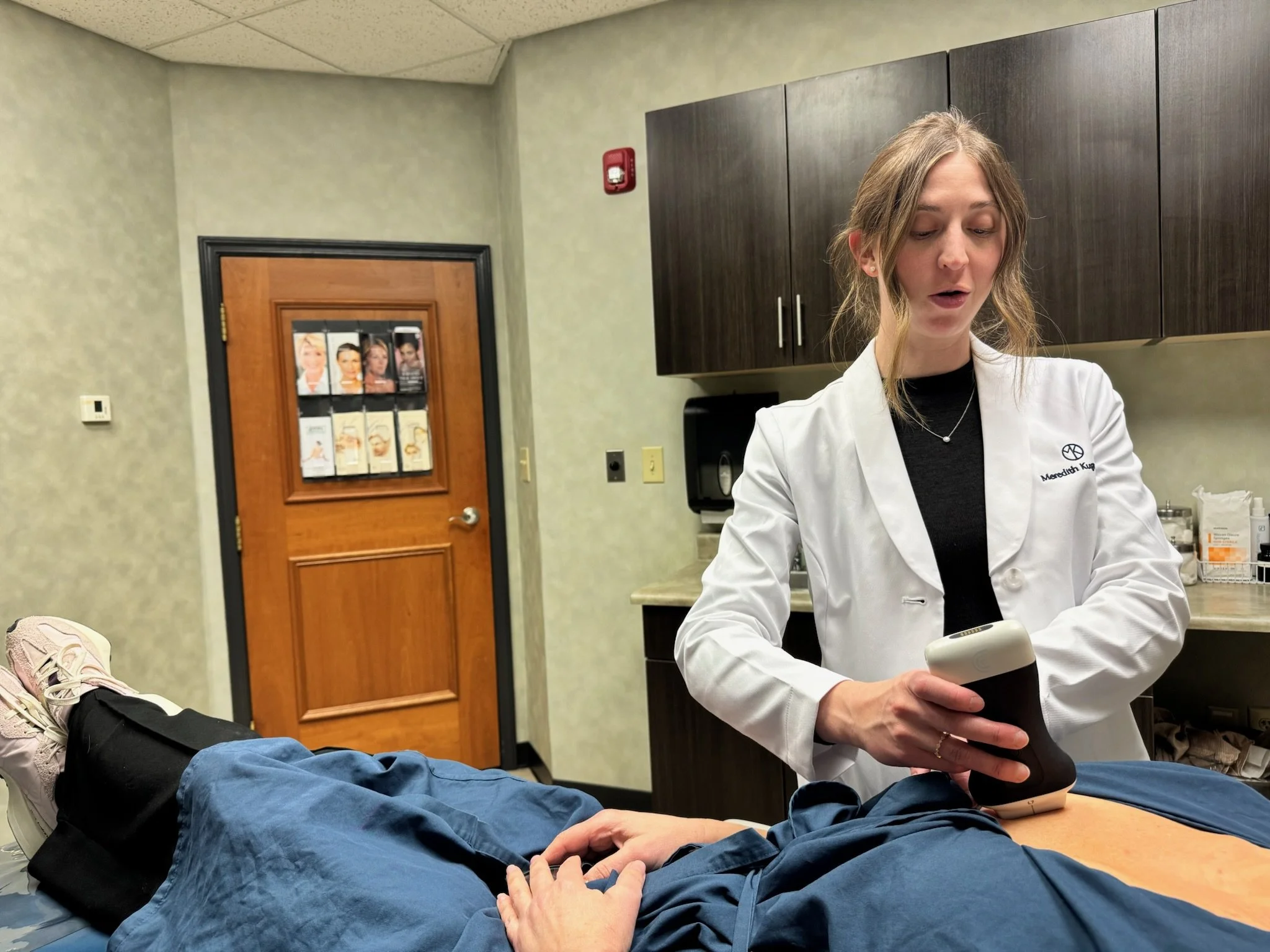
Now, you might be wondering: ultrasound or MRI? MRIs are costly, can be challenging to schedule, and aren't always the most comfortable experience (cue mild claustrophobia + loud noises). Ultrasounds, on the other hand, are much easier, significantly cheaper, more sensitive and specific than MRI (aka better results), and can be done right in the office. I offer free ultrasounds for all of my patients in whom I've placed implants - win-win! The cost of implant ultrasound for patients who had implants placed elsewhere is $95 - feel free to call our office to make an appointment if you are due for implant imaging.
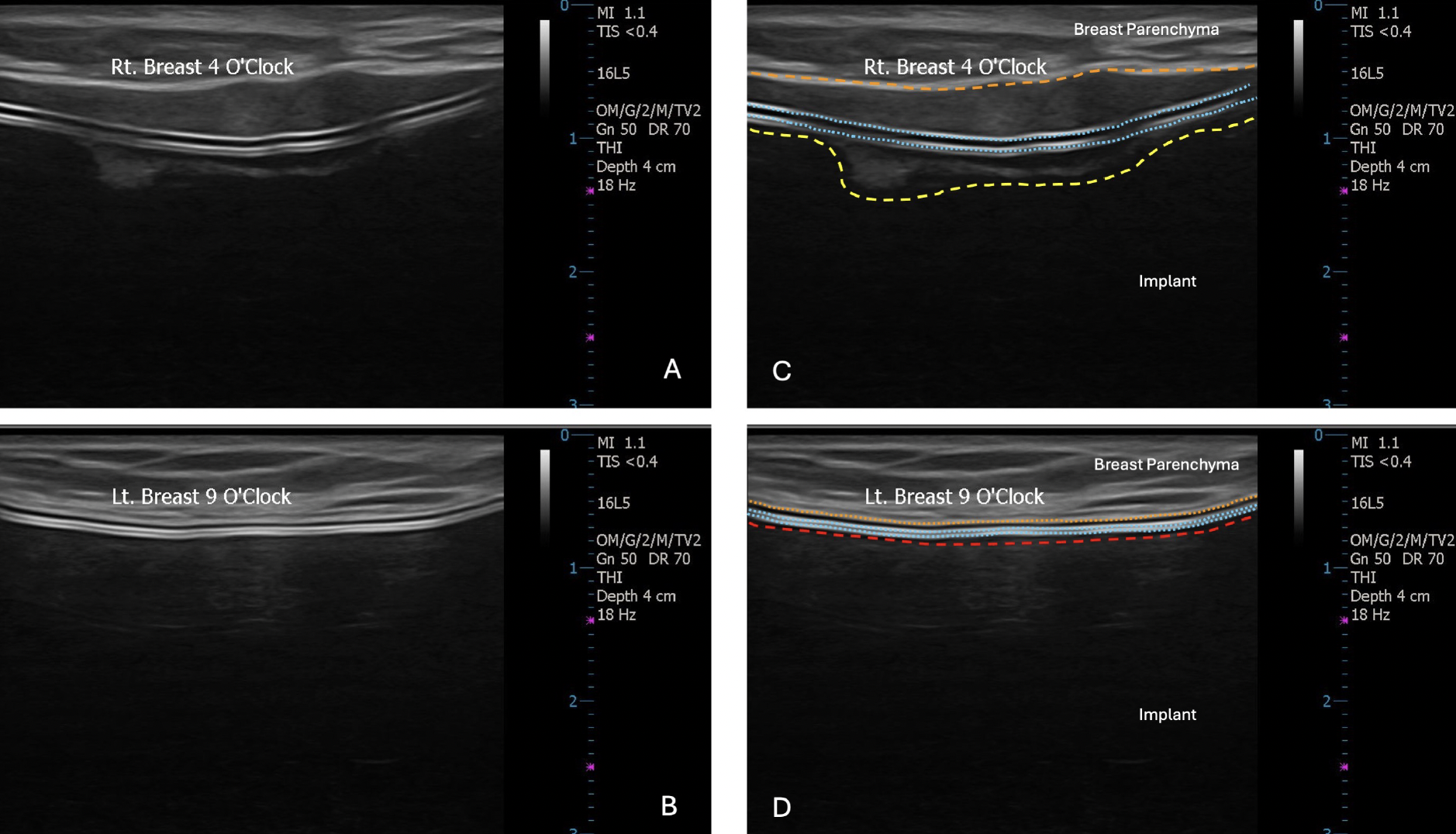
Images A and C on the top show a ruptured implant; images B and D on the bottom show an intact implant. (Glener AD, Sergesketter AR, Adams WP Jr. Outcomes of In-Office, High Resolution Ultrasound Silicone Breast Implant Surveillance by Plastic Surgeons. Aesthet Surg J. 2024 Dec 12;45(1):48-55. doi: 10.1093/asj/sjae165. PMID: 39054844.)
Understanding & Mitigating Implant Risks
I believe in being transparent with my patients about potential risks. The main risks I discuss when it comes to breast implants are:
Capsular Contracture
This is when thick scar tissue forms around the implant, which can make the breast feel firm or look distorted. Early capsular contracture can sometimes be treated with medications (antibiotics, Vitamin E, or Singulair). For late, severe cases, surgery may be required to remove the scar tissue.
Implant Rupture
Using MRI data, the FDA quotes a 10.1% ten-year rupture rate for silicone Allergan implants. There's approximately a 1% cumulative per year risk of device rupture, though this is likely lower as implants have improved significantly over the last decade. Some implants, like Motiva, show slightly lower rupture rates, although we're still assessing long-term data. I have had very low rupture rates with both Motiva and Allergan implants (the two types of implants I offer at my practice).
Your surgeon's technique can also play a big role in your outcome. How the implant is placed can affect both rupture rates and infection/capsular contracture rates. For instance, I use something called the "No Touch" technique, which involves a bunch of anti-infection practices during surgery. The point is: your surgeon's approach and attention to detail during the actual surgery can make a real difference in your long-term results.
Need for Additional Surgery
You might need more surgery down the line due to implant malposition, capsular contracture, implant rupture, wanting a size change, or needing another breast procedure like a lift. This is something to keep in mind, especially if you're getting implants at a young age.
Other Risks
As with any surgery, there are standard risks like infection and bleeding.
What About Fat Transfer?
Fat transfer or fat grafting is another option to provide breast volume. This isn't right for everyone as it provides a less dramatic result and less upper pole fullness than an implant. While it's an option I discuss with patients, I make sure it will meet their specific goals before recommending it.
There's no need for implant surveillance since, well, there are no implants! However, fat necrosis (pockets of fat that don't survive the transfer) can show up on routine breast imaging for breast cancer screening, and sometimes require additional imaging to make sure everything looks okay. This is something to keep in mind when weighing your options.
What to Watch For Between Appointments
Being aware of how your implants look and feel is important. Here are some signs that you should get your implants checked:
If you notice one breast suddenly becoming more hard or firm than the other, or if one implant appears higher or in a different position than before, schedule an appointment. Your body may have some response to an implant rupture (making it NOT a silent rupture!), such as forming hard scar tissue aka capsular contracture. This is why implant surveillance is so important.
Checking in with your plastic surgeon every few years and staying aware of your implants helps you monitor for any changes that might need attention.
How Life Changes Affect Your Implants
Women's breasts can change a lot with time—hormones, pregnancy, menopause, weight gain. Sometimes women experience an increase in breast tissue and decide they're done with implants. Many women's goals change over time. You might not want to look the same way at 60 as you did at 30. You may care less about having round, perky breasts and not want to deal with the maintenance of implants anymore!
Explantation (complete implant removal) is a personal decision that I discuss in depth with all of my patients.
The Financial Side of Things
With the advent of ultrasound as the preferred surveillance method over MRI, implant monitoring is much more affordable for patients than it used to be. However, the financial implications of potential additional surgery are real and something you should consider when making the decision to get implants.
In my practice, I offer implant surveillance ultrasounds for free for all my implant patients because I believe monitoring should be accessible to everyone who has implants.
Implant Myth Busting
Myth #1: “It's an emergency if an implant ruptures!”
Not the case! Often, ruptures are considered "silent.” meaning a silicone implant can be ruptured and there's no immediate indicator to you that this is happening. This is exactly why implant surveillance is recommended. Not all implant ruptures are silent (see above). Sometimes there are signs (implant hardening, change in position), which are indicators to see your plastic surgeon.
Myth #2: “You don't have to do anything if your implant ruptures.”
This also isn't necessarily true. While some surgeons will tell you that you don't have to do anything if you have an implant rupture, over time your body can respond by laying down more, thicker scar tissue around the ruptured implant. This may be less likely with our newer silicone implants, but I still recommend implant exchange if you have a known rupture.
The Bottom Line
Breast implants are wonderful, life-changing devices for many women, but they do require some ongoing attention and maintenance. The good news is that monitoring has become easier, more accessible, and more affordable than ever before.
My approach with all my patients is to make sure you understand what you're getting into prior to surgery. Two highlights: implant ultrasounds to assess for rupture are recommended for silicone (gel) implants, and there is a high likelihood of needing additional breast surgery at some point in your life.
If you have questions about your implants, whether you're considering getting them or you've had them for years, I'm here to help. Let's talk about your goals and how we can keep you feeling confident and beautiful for years to come.