The Nitty-Gritty of Tummy Tucks: Everything You Need to Know
One of the most common things I hear from patients is: "I've worked really hard in the gym, but this excess belly skin doesn't go away!" And you know what? This couldn't be more true.
I love when patients at this point come to see me because what they need is surgery to highlight the hard work they've already done! A tummy tuck addresses excess skin (and often fat) in the abdominal wall that exercise or liposuction alone simply can't fix. This extra skin can be the result of weight loss, pregnancy, or both.
Let's dive into the details of what a tummy tuck actually involves, the different types, and what you can expect.
What Is a Tummy Tuck?
A standard abdominoplasty (the medical term for a tummy tuck) has three main components:
Removal of excess skin and fat from the abdominal wall: This is the primary goal, and focuses on getting rid of that excess tissue that won't budge no matter how many crunches you do.
Liposuction of the abdominal wall: Sometimes this is for targeted fat removal, sometimes for overall shaping and contour. I add liposuction to most of my tummy tucks to optimize the final result.
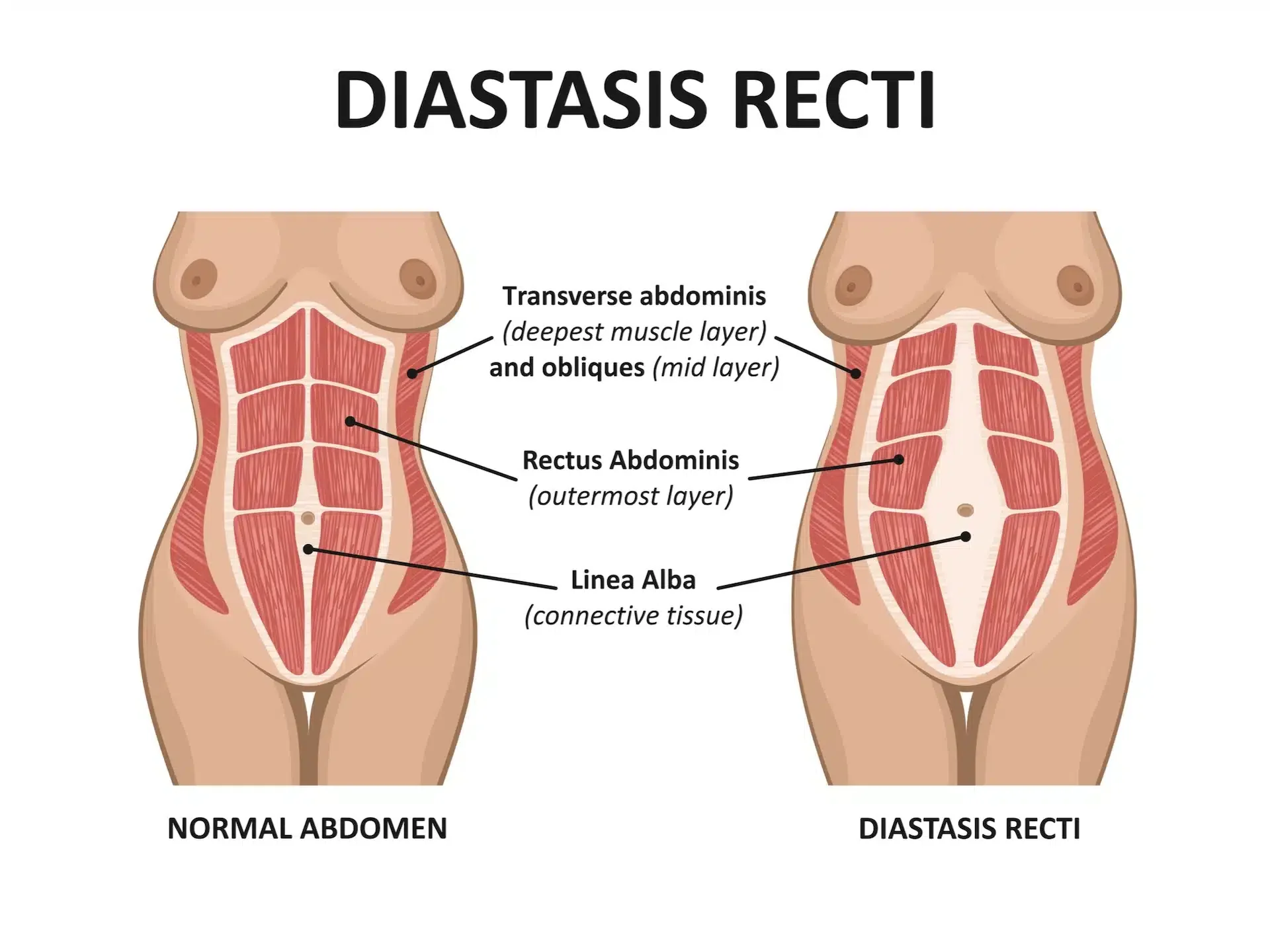
Repair of diastasis recti: Diastasis recti is the separation of your "six-pack" or rectus abdominis muscles. It's different from a hernia because it's not a hole in your abdominal wall, it's the stretching apart of the muscles where they are connected by fascia (a whitish connective tissue). Even if you don't have a huge amount of excess skin, if your abdomen "pooches out" and you're always sucking in, you may hugely benefit from the muscle repair that's part of a tummy tuck.
The Different Types of Tummy Tucks
Not all tummy tucks are created equal! There are several variations, and it's important to determine what's right for you.
Traditional/Standard Tummy Tuck
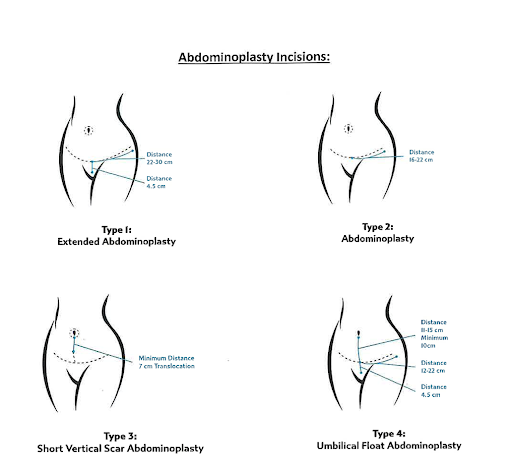
Involves an incision from hip to hip, and also an incision around the belly button.
Extended Tummy Tuck
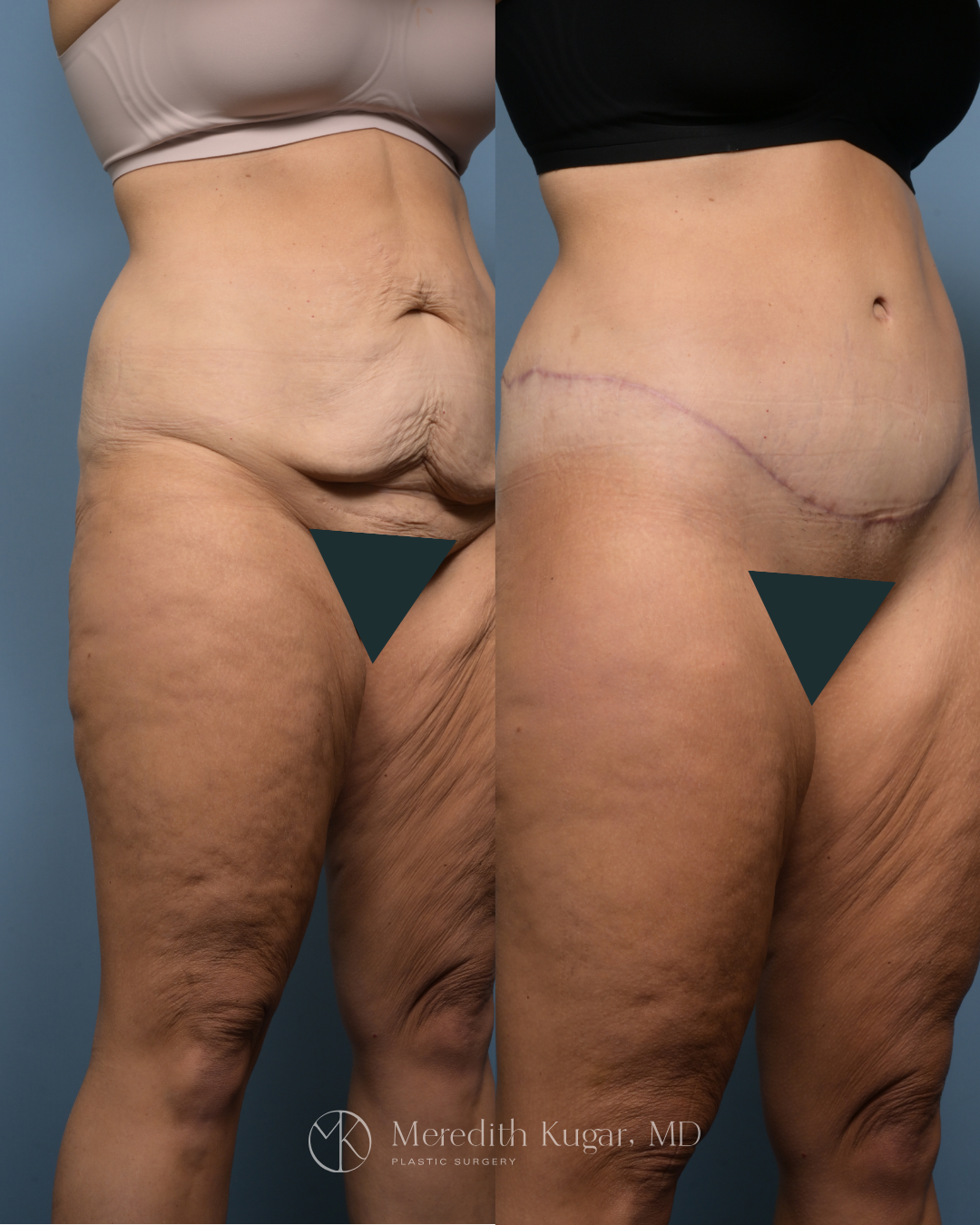
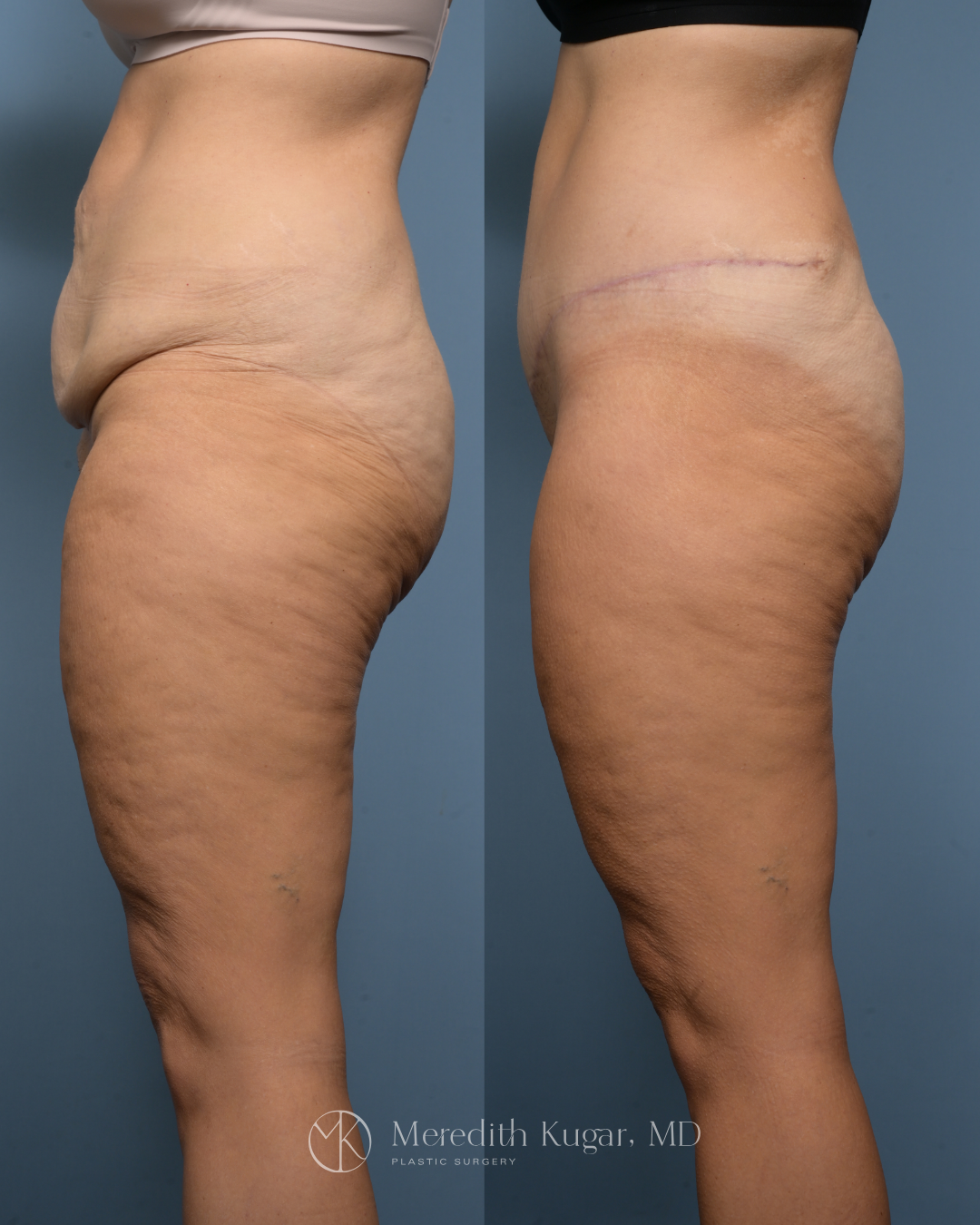
Instead of the incision stopping at the hip bones, in an extended tummy tuck the incision wraps around to the back. This allows for better shaping and removal of excess skin that extends beyond the hip bones (pictured below).
Mini Abdominoplasty
This involves a smaller incision in the lower abdomen and only addresses the lower abdomen below the belly button. It can include diastasis repair below the belly button in addition to skin removal, but it doesn't address skin laxity of the upper abdomen. It's rare that a patient is a good candidate for a mini tummy tuck.
Fleur-de-Lis Tummy Tuck
This incorporates a vertical incision in addition to the horizontal incision. When patients have a significant amount of excess skin, often after massive weight loss, they may need the vertical incision to address skin laxity in the vertical dimension, not just the horizontal dimension.
360 Tummy Tuck
A 360 tummy tuck usually refers to a tummy tuck combined with liposuction of the front and back of the trunk. Not all patients need this—it depends on your anatomy and the distribution of your fat.
My Approach to Tummy Tucks
First, it's important to assess what you are a candidate for and what you would benefit from. There are many small variations to tummy tucks, and determining what's right for you is crucial.
Second, I make my incision as low as possible. Nobody wants a high scar that peeks out over their swimsuit!
Lastly, I work to refine aspects of the procedure including the belly button, lifting of the mons (the area above the pubic bone), and the lateral thigh. I'm trying to give you the best possible overall outcome from this procedure, including impacting other areas of your body besides just the stomach.
Who Is a Good Candidate?
You might be a good candidate for a tummy tuck if you have excess skin and fat of the abdominal wall that exercise alone won't fix. Also, if you have bulging or malposition of your abdominal core muscles (diastasis), restoration of the core muscles to their anatomic position makes you a great candidate for this procedure.
Timing Matters
There's no "best age" for a tummy tuck, but timing is important. Ideally, you should wait until after you're done having kids. I've done tummy tucks on young patients who aren't planning to have children and/or have lost a lot of weight, and also on women in their 70's. There’s really a huge range of when people choose to get tummy tucks.
Weight Considerations
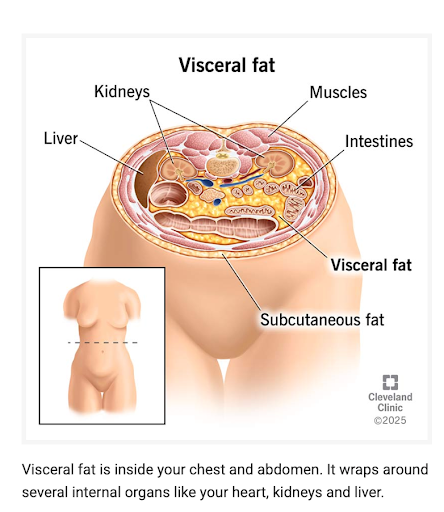
You should be within 20 pounds of your goal weight before surgery. It’s also important to understand that there are two types of fat in the abdomen: subcutaneous fat (under the skin) and visceral fat (inside the abdominal cavity surrounding your organs).
Visceral fat cannot be addressed with a tummy tuck. I can only change and manipulate the subcutaneous fat. A significant visceral fat component is not only bad for your health, but it doesn't help the overall result after a tummy tuck. If you have significant visceral fat, losing this before surgery is one of the best things you can do to optimize your result.
What About Non-Surgical Alternatives?
In short - there aren’t any good ones for a tummy tuck! There is no “free lunch” when it comes to non-surgical alternatives. Any "minimally invasive" treatment that promises a dramatic solution for excess skin or skin laxity of the abdominal wall simply will not work.
There's something called CoolSculpting that melts fat alone, but for patients who have any amount of excess skin or diastasis that requires repair, a tummy tuck is the indicated procedure. Liposuction alone is also not a good alternative to a tummy tuck. Patients without excess skin or significant skin laxity may be good candidates for liposuction alone.
Procedures I Often Combine with Tummy Tucks
Liposuction is the most common addition. I use liposuction to target areas of stubborn fat in the anterior abdomen, flanks, and back. I add liposuction to most of my tummy tucks.
Fat grafting is also worth thinking about if you're interested in repurposing your liposuctioned fat for augmentation of the buttocks or breasts.
“But What About the Belly Button?!”
This is one of the most common questions I get with people considering tummy tucks and I’ll admit, it’s a little hard to visualize…!
The belly button exists on a "stalk" that stays attached to your abdominal wall. During a tummy tuck, I make an incision around your current belly button, keeping this stalk intact and in its original position. Then, the skin on the abdomen is raised up and pulled down from above.
Then, a new incision is made in this freshly-positioned abdominal skin, and your belly button (still on its stalk, still in the same spot) is brought through this new opening. So your belly button itself doesn't move, the skin around it does.
My goal is keep the belly button looking natural by making sure there's good depth and a natural-appearing hollow or depression. That being said, I frequently tell my patients that no surgeon can make a belly button look quite as good as God can!
I'm very thoughtful about all the technical aspects of creating a belly button to optimize its aesthetic appearance. A poorly-scarred belly button is a risk of tummy tuck surgery and can be a tell-tale sign that you've had a tummy tuck, which is why I take such care with this detail.
Recovery and What to Expect
Recovery is about two weeks total, but it’s important for people to know that the first week can be quite tough.
What Makes It Uncomfortable?
We use our core muscles for every motion: getting up out of bed, standing from a chair, you name it. Due to muscle repair, you'll have pain and discomfort in your core with all these motions. The long-acting lidocaine (Exparel) helps for the first three days after surgery, but it's still an uncomfortable recovery. Women who've had C-sections say it's somewhat similar to a C-section recovery.
Recovery Restrictions
No intense working out (elevation of heart rate or blood pressure) for 2 weeks
No heavy lifting over 25 pounds for 4 weeks
No isolated core exercises (planks, sit-ups) for 3 months
What You Should Do
Move around and walk as much as possible! This will help you feel better and also decreases the risk of blood clots. Swelling is significant after a tummy tuck and can take months to fully resolve. I recommend post-surgical lymphatic massage to my patients as this can help speed up the resolution of swelling after surgery.
How Long Do Results Last?
Tummy tuck results should last forever—in the absence of significant events like getting pregnant or gaining and losing a lot of weight. Both of these things stretch out the skin of the abdominal wall and could potentially mean you'd need a revision or additional surgery later.
Why I Love Doing Tummy Tucks
Addressing a problem that has no other fix is extremely gratifying. Tummy tucks are one of the most satisfying procedures I do, and I love getting to reveal a patient's real shape underneath. When someone has worked incredibly hard in the gym and taken care of their body, but they're still dealing with excess skin that won't go away, surgery can finally highlight all that hard work they've put in.
If you've been working hard on your fitness and weight loss goals but still dealing with stubborn excess skin or a persistent "pooch," a tummy tuck might be exactly what you need. Come in for a consultation and let's talk about your goals and how we can help you achieve the results you've been working toward.