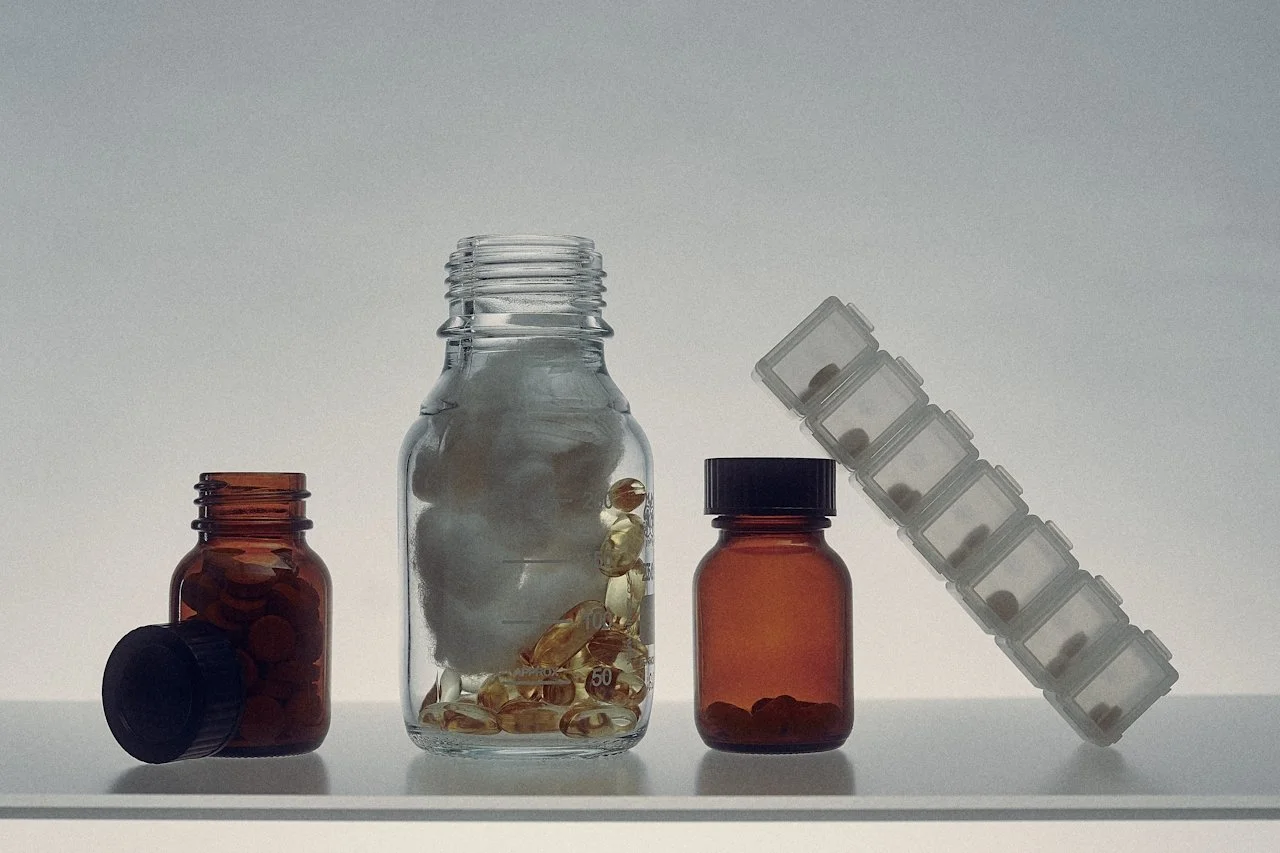
If you’ve been paying attention to health and wellness news over the last couple of years, you’ve probably heard about GLP-1 medications. Drugs like Ozempic, Wegovy, Zepbound, and Mounjaro have had a massive impact on weight loss and subsequently plastic surgery.
A significant number of my patients are on, or have been on, GLP-1 medications. I’d estimate somewhere around 50%. This isn’t just a trend; it’s reshaping how plastic surgeons are thinking about surgical procedures post-weight loss.
The Impact of GLP-1 Medications in My Practice
Weight loss, especially significant weight loss, is a huge accomplishment, and truly one of the healthiest things you can do for your body. I try to congratulate my patients on this incredible achievement! That being said, after substantial weight loss there is often excess skin that bothers patients, and there is no real fix for this other than surgery.
When skin stretches to a certain degree, the collagen and elastin fibers become weakened. The skin becomes less able to bounce back and repair and remodel. When this is the case, surgery is generally the solution that will have the greatest impact.
Because of this skin laxity, I’m seeing a major rise in requests and popularity for body contouring surgeries—that is the name plastic surgeons have for them but essentially, these are surgeries that address excess skin. This includes: arm lift (brachioplasty), thigh lift, abdominoplasty, lower body lifts, etc. There has also been an increase in face lifts and neck lifts, as excess skin in these areas is common after significant weight loss.
Understanding What Happens After Rapid Weight Loss
You may have heard the term “Ozempic face” which refers to the volume loss that can occur after significant weight loss. With significant weight loss, we can lose fat in certain areas of the body, including facial fat compartments. This can make the face look more gaunt and often older. If you picture the face of someone in their 20s, it is full and does not look hollow. Restoring volume in certain areas is an important aspect of plastic surgery following significant weight loss.
It is not necessarily the rapidity of the weight loss that causes these changes, but more about the amount of weight loss. And it's not that the GLP-1 medication itself is affecting tissue quality—rather, the damage has already been done due to stretching of the elastin and collagen components of the skin, which prevents the skin from bouncing back.
One important note: GLP-1 medications can affect our protein stores, which can increase the risk of complications during healing after surgery. If you are on these medications, it is very important to check protein levels before surgery to help optimize healing. The recommended, or goal, amount of protein intake is 1.2 grams of protein per day per kilogram of body weight, or 0.55 grams of protein per pound of body weight. For a 150-pound person, that’s 82 grams or protein a day (https://www.uchealth.org/today/nutrition-vital-when-taking-glp-1-weight-loss-drugs/).
What about Stretch Marks?
I get asked about this a lot! Stretch marks happen with weight gain - so, it's not the GLP-1 itself, but the prior weight gain that causes stretch marks. Unfortunately, there's no magic solution for stretch marks, including topical skincare options or surgery. Surgeries to remove excess skin typically remove some but not all of stretch marks.
My Approach to Skin Laxity & Volume Loss
Often, surgery to address excess skin in multiple areas needs to be split up, or staged, into several procedures. We'll focus on what we can safely accomplish in one surgery and what you want to address first. These body contouring procedures often take a significant amount of surgical time in the operating room, so careful planning is essential. To decrease the time, and increase what can be done in one surgery, I will occasionally work with another plastic surgeon in my practice where I will lead the case and they will assist.
Techniques for Minimizing Scarring
1. Silicone gel or silicone strips applied to scars post-operatively, usually around 2 weeks post-op
2. I utilize Brijjits on some, but not all, incisions.
3. I make sure you protein stores are adequate before surgery - this minimizes risk of poor wound-healing or dehiscence (scars coming apart), which can cause the final scars to be wider and more noticeable.
Do Patients on GLP-1 Have Different Surgical Outcomes?
This is a great question I hear often. The short answer: outcomes can be similar, but the approach may differ based on the amount of skin laxity.
For example, if there's excess skin in the vertical dimension after significant weight loss, a patient may need a fleur-de-lis abdominoplasty (which has both a horizontal and vertical incision) as opposed to a traditional abdominoplasty (which has just the lower horizontal incision). The goal is always to achieve the best possible result—sometimes that requires a different surgical plan or different incisions for patients with significant weight loss.
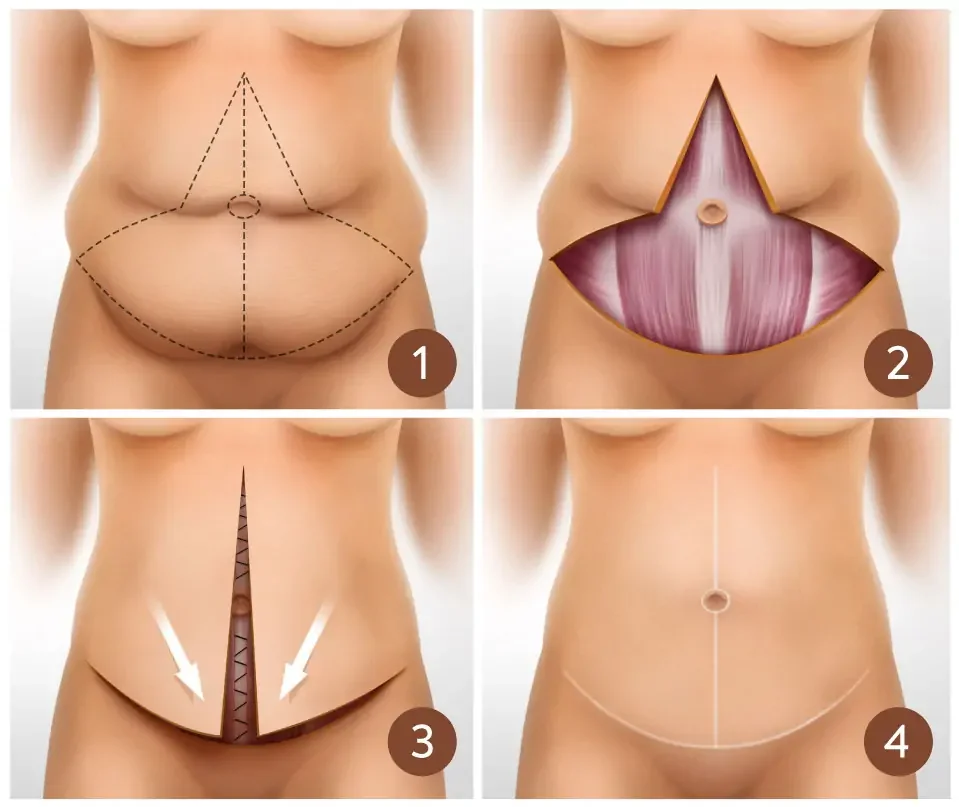
Fleur-De-Lis Tummy Tuck Incision
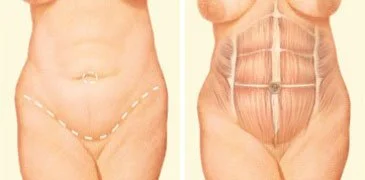
Traditional Tummy Tuck Incision
Debunking Myths About Skin Tightening Devices
For the perfect candidate, skin tightening devices can work, but that patient is very rare—even more rare in the setting of significant weight-loss on a GLP-1 medication!
Nine point nine times out of ten, I don't recommend these devices for my patients dealing with significant excess skin after weight loss. They can lead to problematic scarring, and their results often underdeliver. Many patients end up pursuing the surgical solution when they're not satisfied with these more minimally invasive treatments.
You're likely better off saving your money for surgery to address significant excess skin, rather than spending it on treatments that may not give you the results you're hoping for.
“When used in the right patient and in the right way (as a tool to help not only with weight loss but also with making lifestyle changes), [GLP1-s] can have a hugely positive effect on overall health and well-being, as well as patients’ body image and how comfortable they feel in their own bodies.”
My Take on GLP-1s
As a board-certified plastic surgeon, here's my general consensus on the risk-benefit of GLP-1 medications: when used in the right patient and in the right way (as a tool to help not only with weight loss but also with making lifestyle changes), they can have a hugely positive effect on overall health and well-being, as well as patients' body image and how comfortable they feel in their own bodies.
There are risks associated with GLP-1s which should be discussed with your doctor before starting these medications, but they are a very powerful weight-loss tool that has changed how we approach weight loss in general.
Looking Ahead
I don't think GLP-1s are going anywhere. They will become even more accessible and widely used. Right now they are injectable medications, but companies are working to develop oral GLP-1s which will make them more easily accessible.
I think we will learn more about how to use these medications optimally, how to maintain results long-term, and how to do so in even healthier ways. Ultimately, we may not see people with as significant weight gain if they are able to start on these medications earlier.
TL;DR
GLP-1 medications have been transformative for weight loss, and I'm seeing more and more patients who have achieved incredible results with them. If you're dealing with excess skin or volume loss after significant weight loss, know that there are surgical solutions that can help you feel more comfortable and confident in your body.
My approach is always to listen to your goals, discuss your options honestly, and create a plan that's right for you. Whether you're currently on GLP-1 medications, have been on them in the past, or achieved weight loss through other means, I'm here to support you in feeling your best. Come on in and let's talk about your goals, and how we can safely and responsibly help you achieve them.