What Is the Preservé Breast Augmentation Technique?
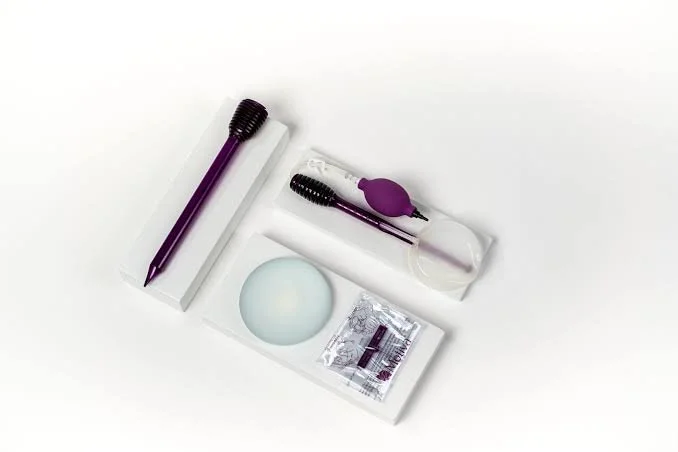
Image source: Motiva
If you've been researching breast augmentation lately, there's a good chance you've come across the Preservé technique. It's been getting a lot of buzz, and for good reason. Here's what it actually is, how it differs from more traditional approaches, and whether it might be the right fit for you.
The WHERE: Implant Placement
To understand Preservé, it helps to start with implant placement. Implants can be placed above or underneath the chest muscle (the pectoralis major). If placed above the muscle, the implant can sit either underneath the fascia (a thin white covering over the muscle), or in the subglandular plane, which is directly underneath the breast gland.
The Preservé implant is placed in the subglandular plane. [Link to implant placement diagram here]
The HOW: A Different Kind of Dissection
This is where Preservé really differs from traditional techniques. A small incision (2.5–3cm) is made in the fold of the breast. A long instrument called an introducer is placed through that incision, and a balloon on the end is inflated to gently push tissue aside and create the space where the implant will go. More traditional techniques use direct dissection with electrocautery to create that same space.
Is It Better, Worse, or Just Different?
There's no clear-cut answer here. I tell my patients all the time that every surgical option comes with tradeoffs.
Some advantages of the Preservé technique:
Quicker recovery. Most patients are back to normal activity within 24–48 hours.
It can be performed without general anesthesia, though not all providers in the US are offering this yet.
One thing worth noting: the Preservé incision (2.5–3cm) is not dramatically smaller than my incision for a more traditional breast augmentation (3.5cm). It's a small difference.
Who Is a Good Candidate for Preservé?
Preservé tends to be a good fit for patients who:
Are interested in a smaller volume implant
Want the most minimal downtime possible
Are drawn to the specific aesthetic that Preservé produces — depending on how much breast tissue you have, this technique can look more round and augmented compared to implants placed beneath the muscle. Both are valid options, but it’s important to talk with your plastic surgeon about what is right for you.
What About Long-Term Risks?
As a specialty, we are still figuring out the full picture of long-term advantages and tradeoffs with this technique. What I can say is that any implant requires some level of maintenance, including imaging to assess for rupture, and the possibility of needing additional surgery down the road. Different techniques come with slightly different risk profiles, and that's always part of the conversation during a consult.
Do We Offer Preservé at Meridian?
Yes! And if you'd like to be one of my first Preservé patients, let's talk to see if you're a good candidate.
There is an additional cost associated with the instruments required for the Preservé technique, so that's worth factoring into your planning as well.
TL;DR
Preservé is a newer breast augmentation technique where the implant is placed directly underneath the breast gland using a minimally invasive approach. It's one of many tools in my toolbox, and different options are right for different patients. What you see online can be conflicting and confusing. The best next step is scheduling a consult with a board-certified plastic surgeon to talk through what approach makes the most sense for you.